Letitia Morris Gallery
Google star 1Google star 2Google star 3Google star 4Google star 5
4.942 Google reviews
Posted on Google Google
Melbourne Building Repairs profile picture
Melbourne Building Repairs
Google star 1Google star 2Google star 3Google star 4Google star 5Trustindex verifies that the original source of the review is Google.
Really nice quality original vintage posters here. I purchased 5 posters, all framed and delivered. Couldn't be happier. Jim and Haley were incredibly helpful. Highly recommended.
Posted on Google Google
Chris Small profile picture
Chris Small
Google star 1Google star 2Google star 3Google star 4Google star 5Trustindex verifies that the original source of the review is Google.
Excellent service very professional. Quick and responsive communication. Will be using thus service again. Very very happy. Both Jim and Hayley are lovely!
Posted on Google Google
James Gleeson profile picture
James Gleeson
Google star 1Google star 2Google star 3Google star 4Google star 5Trustindex verifies that the original source of the review is Google.
Couldn’t be more happy with my new poster. It fills the blank wall perfectly. Not to mention the enthusiastic and kind staff. I highly recommend.
Posted on Google Google
Matt Foord profile picture
Matt Foord
Google star 1Google star 2Google star 3Google star 4Google star 5Trustindex verifies that the original source of the review is Google.
Beautiful gallery space with friendly and helpful staff. Incredible selection of antique works and they provided delivery right to my door! 10/10 would recommend.
Posted on Google Google
Kathryn Rae profile picture
Kathryn Rae
Google star 1Google star 2Google star 3Google star 4Google star 5Trustindex verifies that the original source of the review is Google.
Great advice and service! My wonderful vintage poster looks fabulous!
Posted on Google Google
John Pinto profile picture
John Pinto
Google star 1Google star 2Google star 3Google star 4Google star 5Trustindex verifies that the original source of the review is Google.
Where do I start! This place helped me get over my acne (which I've been dealing with for the last 2 years) And the wide collection of posters is incredible! The only downside is how good looking the French boy on the tmax is... Awesome stuff guys.
Posted on Google Google
TobiasTKT profile picture
TobiasTKT
Google star 1Google star 2Google star 3Google star 4Google star 5Trustindex verifies that the original source of the review is Google.
Haven’t. Been here yet.. but can’t bloody wait

Exhibition Poster

  • Le Corbusier: Architect, Artist and the “Muralnomad” Tapestries

    A Rare Find for Architecture Lovers
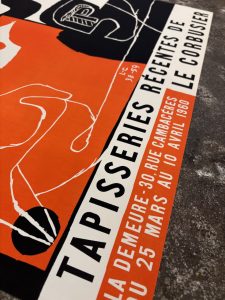
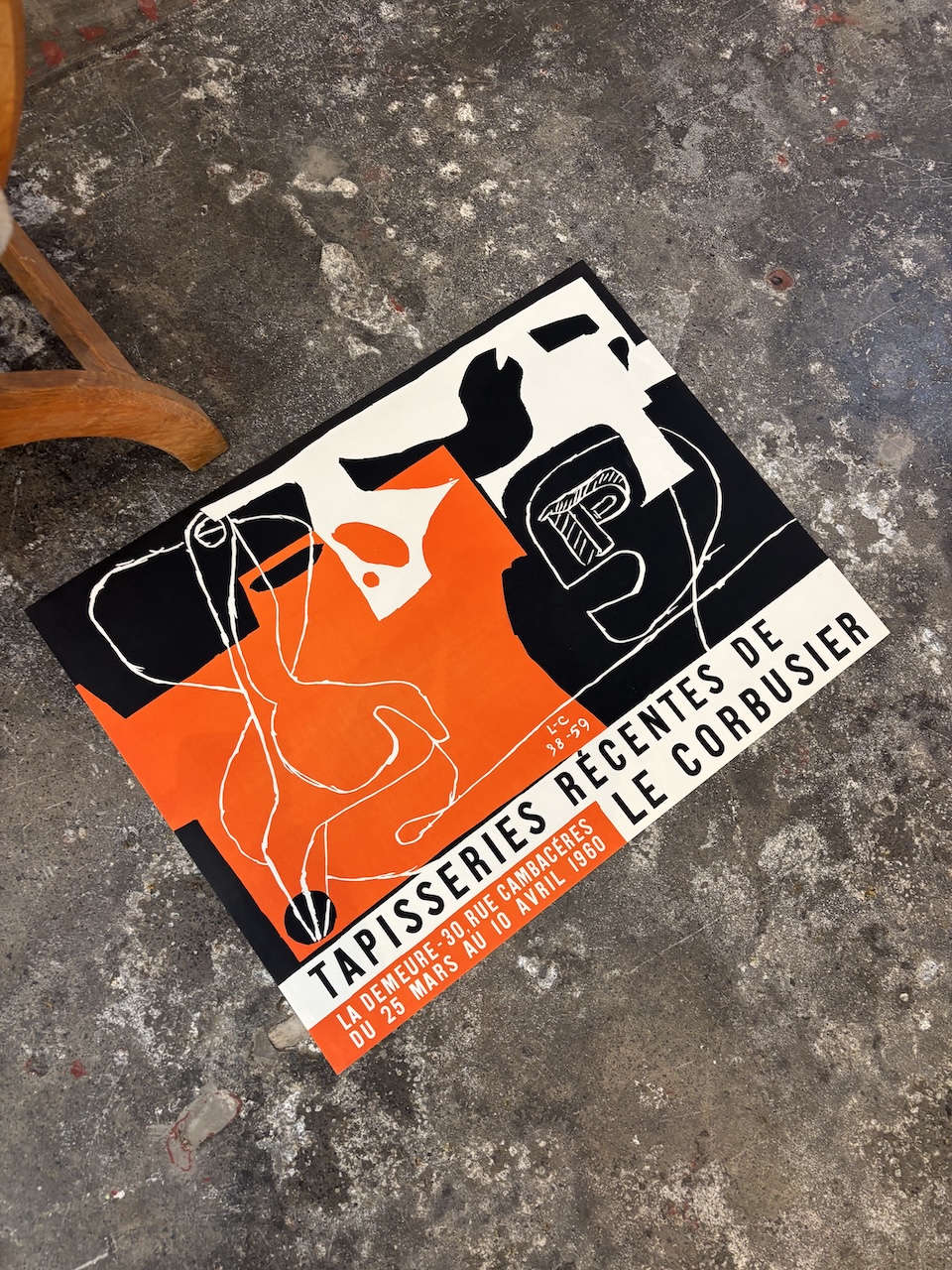
    We’ve just brought home a genuinely unique piece from Paris — an original 1960 exhibition poster for Tapisseries récentes de Le Corbusier at Galerie La Demeure. It’s a true first edition, distinct from the later reprints that circulate more widely, and a rare find for anyone who collects architecture, design or modernism.

    Le Corbusier needs little introduction as an architect, but far fewer people know him as a textile artist — which is exactly what makes this poster such an interesting piece of design history.

    Who Was Le Corbusier

    Born Charles-Édouard Jeanneret in Switzerland in 1887, Le Corbusier became one of the most influential architects of the twentieth century and a pioneer of modernism. He trained not as an architect in the traditional sense but as an engraver and designer, before travelling widely through Europe and the Mediterranean — journeys that shaped his lifelong obsession with proportion, light and pure geometric form.

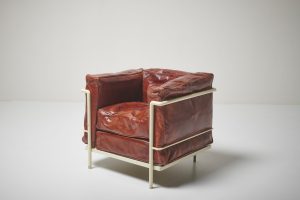
    He settled in Paris in the 1920s and, alongside his cousin Pierre Jeanneret, began developing the ideas that would define his career: that a house should be “a machine for living in,” stripped of ornament and built around function, light and structure. It’s a philosophy that reshaped how architects everywhere thought about space and concrete.
    The Five Points of Architecture

    In 1927, Le Corbusier articulated his “Five Points of Architecture” — pilotis (supporting columns lifting the building off the ground), a free façade, an open floor plan, ribbon windows, and a roof garden. These principles found their purest expression in Villa Savoye (Poissy, 1931), a house that looks almost weightless, floating above its lawn on slender white columns.

    He carried these ideas into a very different scale with Unité d’Habitation (Marseille, 1952) — a vertical village of apartments, shops and a rooftop terrace that became the blueprint for post-war social housing across the world. Later, at Notre-Dame du Haut in Ronchamp (1955), he abandoned the machine-age austerity of his earlier work entirely, producing a sculptural chapel of curved concrete and coloured light that remains one of the most moving religious buildings of the modern era. In the final chapter of his career, he turned to urban planning at the scale of a whole city, designing Chandigarh, the master-planned capital of Punjab, India, including its monumental Palace of Assembly and High Court.
    The Muralnomad Tapestries

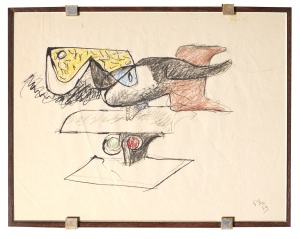
    What’s less well known is that Le Corbusier spent nearly three decades working as a textile artist. He discovered tapestry in 1936, through the collector Marie Cuttoli, who was reviving the ancient Aubusson weaving tradition. By 1948 he had developed his own theory of it, which he called the “Muralnomad” — the idea that a tapestry could be a mobile, architectural element of the modern house, something that could be “detached from the wall, rolled up and taken under the arm” and carried to another room, or another home entirely.

    Between 1936 and 1965 he produced around thirty tapestries, among them Les Mains (1951), Bonjour Calder (1958) and Traces de pas dans la nuit (1957), drawing on the same purist forms and figures found throughout his paintings. His tapestries went on to receive major public commissions, including large-scale works for UNESCO’s Paris headquarters. Galerie La Demeure — the gallery behind this very poster — was central to that story, championing his woven murals in Paris and giving them the same serious attention as his buildings.
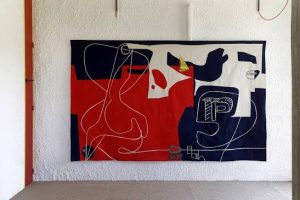
    Why the Original Is Worth Having

    Reprints of this exhibition poster circulate fairly widely online, but this is the genuine first edition, printed for the 1960 exhibition itself. Where a later reprint is flat and mass-produced, an original carries the texture, the slight imperfections of period printing, and the historical weight of having actually hung in Paris to announce the show. For a collector of architecture or twentieth-century design, that difference matters — this is a piece of the same story as Villa Savoye and Ronchamp, not a copy of one.

    Where to See It

    Like all our posters, this one can be viewed in person at the gallery — 1158 High Street, Armadale, Melbourne — open six days a week. We’re always happy to talk through condition, framing and shipping in person or over the phone.

    https://letitiamorris.com/product/le-corbusier-1960-la-demeure-tapisseries-recentes/]
  • Original Art & Exhibition Posters

    Original Art & Exhibition Posters

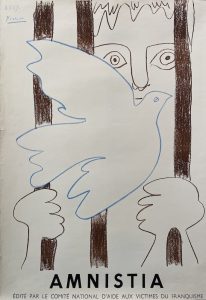
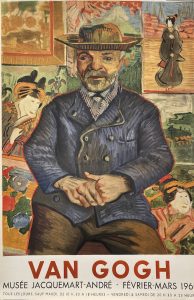
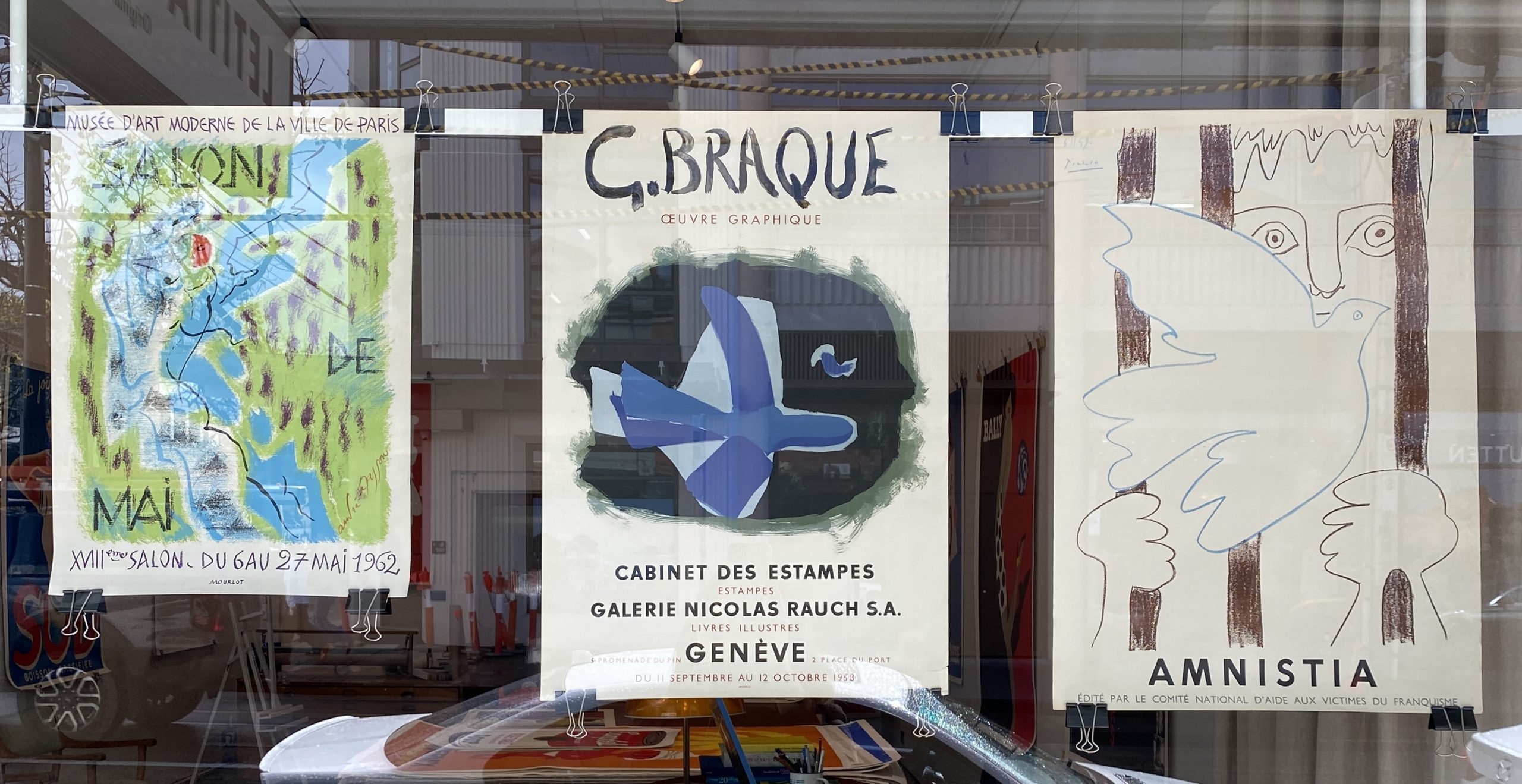
    Art and exhibition posters by legendary artists such as David Hockney, Pablo Picasso, and Andy Warhol occupy a fascinating and highly coveted niche in the world of fine art collecting. Unlike original paintings or sculptures, these posters were typically produced in limited runs to promote specific gallery shows, museum retrospectives, or cultural events often printed in editions of just a few hundred copies.

    Additionally, the artists themselves were often directly involved in the design process — Picasso contributed original lithographic compositions, Warhol brought his signature screen-printing aesthetic, and Hockney lent his vivid, painterly sensibility — elevating these works far beyond ordinary advertising material and into the realm of original art.

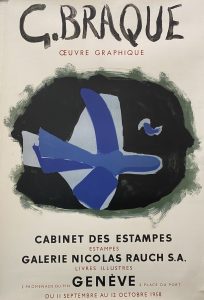
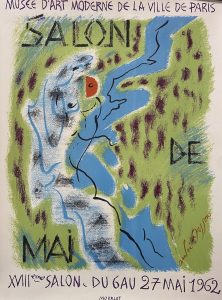
    At the heart of this world was the legendary Mourlot Imprimerie, founded by Fernand Mourlot in 1852, which became the premier lithographic workshop in Europe and worked closely with virtually every major artist of the twentieth century — from Picasso and Matisse to Braque and Miró. Mourlot’s master craftsmen possessed an extraordinary ability to translate an artist’s vision directly onto stone, and the posters they produced for exhibitions at iconic Parisian venues such as the Galerie Maeght, the Galerie Louise Leiris, and the Musée des Arts Décoratifs were printed in strictly limited numbers, intended primarily for display in the streets and galleries of Paris rather than for posterity.

     As awareness of the artistic and historical significance of original art and exhibition posters has grown among collectors and institutions, demand has dramatically outpaced supply, cementing their status as rare and desirable objects that command serious attention at auction and in specialist galleries worldwide. View our enire range of orignal art posters here


Close